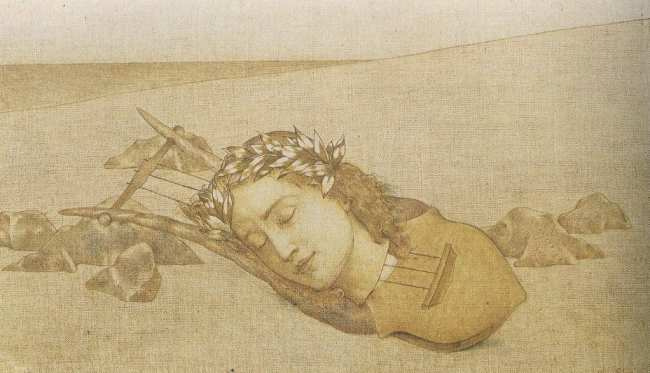
Welcome to my Opera blog. I'll be writing about what Opera Roanoke is up to, and about some of the connections between and across opera and the arts.
Thursday, November 1, 2012
Tempests, Ghosts & Mad Queens this weekend!
We launch our new series, The Masques of Orpheus this weekend! Here's a sneak peak at the program:
Tempests, Ghosts & Mad Queens:
A Masque for voices, players and dancers…
Featuring Opera Roanoke’s Young Apprentice Artists
November 2: The Jacksonville Center for the Arts, Floyd, 7:30 pm
November 4: The Waldron Theatre, Roanoke, 7 pm
Named after the original singer-songwriter-composer, the Greek bard Orpheus is considered one of the ancient founders of music itself. The Masque was an early form of “festive entertainment” featuring “singers, dancers, actors, poets and players.”
Opera Roanoke’s Masques of Orpheus is a new series of innovative programs of entertainment featuring a variety of music and theatre, poetry and dance.
Program:
from Sweeney Todd
by Stephen Sondheim (b. 1930)
Prologue: The Ballad of Sweeney Todd
from The Magic Flute
by Wolfgang Amadeus Mozart (1756-1791)
Opening scene: Zu Hilfe! Zu Hilfe!
Tamino, Three Ladies
Aria: Der Hölle Rache kocht in meinem Herzen
Queen of the Night
Duet: Papagena! Papageno!
Papagena, Papageno
from Candide
by Leonard Bernstein (1918-1990)
Aria: Glitter and be gay
from The Tales of Hoffmann
by Jacques Offenbach (1819-1880)
Entr’acte and Barcarolle
from The Medium
by Gian Carlo Menotti (1911-2007)
Monica’s Waltz and The Black Swan
from Three Shakespeare Songs
by Ralph Vaughan Williams (1872-1958)
Full Fathom Five
The Cloud Capp’d Towers
Be Not Afeard
by James Lego (b. 1990)
*World Premiere Performance
Epilogue: The Ballad of Sweeney Todd
Our dynamic artists will be decked out in gothic costumes and make-up to fit our Halloween theme. Edgar Allan Poe will be our guest host from the beyond in this original evening of music, theatre, dance & poetry not to be missed!
Friday, October 26, 2012
Autumn Leaves at the Taubman Museum
L2P | Fall 2012 | Nature & Culture | landscape & soundscape | SMW
This installment of Listening to Paintings is focused on Nature & Culture or Landscape & Soundscape. Or, how human creativity interacts with the world and how aspects of culture affect it. We start with Burtynsky’s brilliant exhibit of large Oil-inspired photos and note the commentary his perspectives inspire. We pair the beloved standard, Autumn Leaves with his hauntingly beautiful photograph of rusty iron scraps piled up like fall’s most enduring symbol. Ferrous Bushlings inspires a reading from Lloyd Schwarz’s contemporary poem, Leaves, whose image of “flame and rust” is embodied in Burtynsky’s picture. (Poetry excerpts are courtesy of The American Academy of Poets: www.poets.org)
Leaves – Lloyd Schwarz |Autumn Leaves | Burtynsky’s Oil
1. Every October it becomes important, no, necessary
to see the leaves turning, to be surrounded
by leaves turning; it's not just the symbolism,
to confront in the death of the year your death,
one blazing farewell appearance, though the irony
isn't lost on you that nature is most seductive
when it's about to die, flaunting the dazzle of its
incipient exit, an ending that at least so far
the effects of human progress (pollution, acid rain)
have not yet frightened you enough to make you believe
is real; that is, you know this ending is a deception
because of course nature is always renewing itself—
the trees don't die, they just pretend,
go out in style, and return in style: a new style.
3. You'll be driving along depressed when suddenly
a cloud will move and the sun will muscle through
and ignite the hills. It may not last. Probably
won't last. But for a moment the whole world
comes to. Wakes up. Proves it lives. It lives—
red, yellow, orange, brown, russet, ocher, vermilion,
gold. Flame and rust. Flame and rust, the permutations
of burning. You're on fire. Your eyes are on fire.
It won't last, you don't want it to last. You
can't stand any more. But you don't want it to stop.
It's what you've come for. It's what you'll
come back for. It won't stay with you, but you'll
remember that it felt like nothing else you've felt
or something you've felt that also didn't last.
II. Virginia Crossroads | pastiche | modernism | Color & Light…
Goolsby’s suburban landscapes | Clingempeel’s encaustics
Sulkin’s photos of “arbitrary objects,” “provoking more q’s than a’s…
Krisch’s photos of severe landscapes, Antarctic icebergs, waters & mountains
Freed’s "James River fragments" | "Heavenly Grass" by Paul Bowles & T Williams
Line | texture | pastiche | polyphony | harmony | chromatic | color & light | chiaroscuro
We comment on all the parallels between the so-called “plastic” arts and music, and the overlap in terminology between painting, music and poetry. The above terms are applied equally to all three lyric forms. Composers use a “palette” of harmonic “color” to paint musical pictures while “all art aspires to the condition of music” as art critic Walter Pater reminds us in his studies of Renaissance Art. And it is in the Renaissance where our forms truly merge.
As Caravaggio and his contemporaries master the art of chiaroscuro (literally “bright – dark”) through the use of color, light and shadows their musical colleagues like Monteverdi and Gesualdo are experimenting with the chromatic possibilities of harmony by exploiting the dissonances between the traditional steps of the “do-re-mi-fa-sol” scale.
We connect Clingempeel’s evocative encaustics: bright-dark nebulae, cells, glow-in-the dark creatures or abstract experiments back to ancient Egypt, and remember how tried and tested this method of creating color and texture is.
(encaustic = ancient technique of heating beeswax & adding pigment for color & texture)
We note Sulkin’s photographs of “arbitrary objects,” images of Rauschenberg-like combines or found-art collages that “provoke more questions than answers.” We pause to consider how central this truth is in the classroom and in life. It’s the journey not the goal, or as Sondheim says in his brilliant song, Someone in a Tree: “It’s the ripple, nor the stream | Not the building but the beam | That is happening…”
We read Carl Sandburg’s epigrammatic postcard of a poem to Autumn's "Harvest moon:"
Under the harvest moon,
When the soft silver
Drips shimmering
Over the garden nights,
Death, the gray mocker,
Comes and whispers to you
As a beautiful friend
Who remembers.
Under the summer roses
When the flagrant crimson
Lurks in the dusk
Of the wild red leaves,
Love, with little hands,
Comes and touches you
With a thousand memories,
And asks you
Beautiful, unanswerable questions.
One of the questions we posed in this room, looking at Sam Krisch's gorgeous photos from Antarctica, was whether or not the Roanoke artist had the Taubman's bold architecture in mind when he took one of his iceberg images in particular. Check it out on the artist's website: samkrisch.com and then see it in person at the Taubman.
Goolsby’s suburban landscapes also prompt more questions than answers, and like Clingempeel’s encaustics, we appreciate these canvases for the technical accomplishments and their abstract beauty as much as we try to “read” what the artist is depicting in his dark contemporary landscapes. Connecting to Burtynsky’s industrial images, Goolsby is also concerned with how human culture has altered nature’s landscapes. We note his use of impasto technique, combined with a number of other brushstrokes and applications of paint in these engaging canvases.
impasto (impastare = to knead or to paste) = thick oil or acrylic texture; thick paste
Before we sing Paul Bowles’ folk-like setting of Tennesse Williams’ Blue Mountain Ballad, “Heavenly Grass,” inviting our audience to take a walk with the bard while we sing the simple, gently melancholy song, we read a Robert Frost poem to connect to Freed’s Japanese print – inspired etchings and prints of James River images. Frost’s October, Freed’s “Short Days” and Bowles’ wistful tune combine to evoke this season with pitch-perfect details.
O hushed October morning mild,
Thy leaves have ripened to the fall;
To-morrow's wind, if it be wild,
Should waste them all.
The crows above the forest call;
To-morrow they may form and go.
O hushed October morning mild,
Begin the hours of this day slow,
Make the day seem to us less brief.
Hearts not averse to being beguiled,
Beguile us in the way you know;
Release one leaf at break of day;
At noon release another leaf;
One from our trees, one far away;
Retard the sun with gentle mist;
Enchant the land with amethyst.
Slow, slow!
For the grapes' sake, if they were all,
Whose leaves already are burnt with frost,
Whose clustered fruit must else be lost—
For the grapes' sake along the wall.
III. Un-usual Landscapes, [found] objects, movements & riddles…
We next spent some time with Harold Little’s land- and city-scapes, his apparent homage to Van Gogh in his landscape with cornfields, crows and cryptically hidden deer. One must approach his canvas up close to count how many bucks and does are hiding in his corn stalks. Another cryptic landscape functions as an allegory and a memento mori (another “old master” form), as well as being a representational autumn landscape, replete with glowing Harvest Moon. We read another Sandburg poem to mark this spot.
I cried over beautiful things knowing no beautiful thing lasts.
The field of cornflower yellow is a scarf at the neck of the copper sunburned woman,
the mother of the year, the taker of seeds.
The northwest wind comes and the yellow is torn full of holes, new beautiful things
come in the first spit of snow on the northwest wind, and the old things go,
not one lasts. (Autumn Movement – Sandburg)
Riddles – Little’s hidden images, more open-ended details...
We then read one of our beloved Edgar Allan Poe’s hermetically sealed poems. A Valentine is dedicated to another gifted writer and friend of the poet’s, Franny Osgood. The first letter of the first line, the second letter of the 2nd line, the 3rd letter of the 3rd line, etc spell out the name of Poe’s subject: Frances Sargent Osgood.
A Valentine – Poe
For her this rhyme is penned, whose luminous eyes,
Brightly expressive as the twins of Leda,
Shall find her own sweet name, that nestling lies
Upon the page, enwrapped from every reader.
Search narrowly the lines!- they hold a treasure
Divine- a talisman- an amulet
That must be worn at heart. Search well the measure-
The words- the syllables! Do not forget
The trivialest point, or you may lose your labor
And yet there is in this no Gordian knot
Which one might not undo without a sabre,
If one could merely comprehend the plot.
Enwritten upon the leaf where now are peering
Eyes scintillating soul, there lie perdus
Three eloquent words oft uttered in the hearing
Of poets, by poets- as the name is a poet's, too,
Its letters, although naturally lying
Like the knight Pinto- Mendez Ferdinando-
Still form a synonym for Truth- Cease trying!
You will not read the riddle, though you do the best you can do.
Un-usual folk | Folk song as “found object” | Theresa Disney’s portrait poems |
Appalachian composer John Jacob Niles: Black is the Color of My True Love’s Hair
We then sang another folk song, from Appalachian composer John Jacob Niles, who traveled through these here parts collecting songs he heard locals singing. “I wonder as I wander” and “Poor Wayfaring Stranger” are but two examples of these songs he heard, wrote down and arranged. Like the objects and crafts, quilts, prints and portraits in the eclectic “Un-usual Folk” exhibit, this folk-song proved a perfect filament to connect the various strands of art in and around the American galleries.
IV. Our fourth and final movement in this Autumn Leaves edition of Listening to Paintings paired two contemporary American art songs for which I accompanied Amy. We shared colorful – however contrasting – songs by Richard Hundley and John Corigliano under Anne Ferrer’s fantastic silk-sail-air-balloon sculpture, Hot Pink. Variously evoking sea creatures, French pastries and the idea of floating in air, Ferrer’s vision was a perfect canopy atop our renditions of Hundley’s Astronomers and Corigliano’s Halloween-esque “Song to the Witch of the Cloisters.” Honoring visionary women artists, we shared Amy Lowell’s bright poem, Autumn, and excerpts from Gertrude Stein’s fantastic “Tender Buttons.”
Autumn – Amy Lowell ("polyphonic prose" = modernist mix or pastiche...)
They brought me a quilled, yellow dahlia,
Opulent, flaunting.
Round gold
Flung out of a pale green stalk.
Round, ripe gold
Of maturity,
Meticulously frilled and flaming,
A fire-ball of proclamation:
Fecundity decked in staring yellow
For all the world to see.
They brought a quilled, yellow dahlia,
To me who am barren
Shall I send it to you,
You who have taken with you
All I once possessed?
From Tender Buttons – Gertrude Stein
In any kind of place there is a top to covering and it is a pleasure at any rate there is some venturing in refusing to believe nonsense. It shows what use there is in a whole piece if one uses it and it is extreme and very likely the little things could be dearer but in any case there is a bargain and if there is the best thing to do is to take it away and wear it and then be reckless be reckless and resolved on returning gratitude…
Light blue and the same red with purple makes a change. It shows that there is no mistake. Any pink shows that and very likely it is reasonable. Very likely there should not be a finer fancy present. Some increase means a calamity and this is the best preparation for three and more being together. A little calm is so ordinary and in any case there is sweetness and some of that…
We may have no idea what Stein means, but her polyphonic poetry is a pleasure to recite and sounds like a “rich and strange” music to the ears. As a postscript, we dedicated Bernstein’s touching lullaby, “Take Care of This House” (originally written for the musical flop, 1600 Pennsylvania Avenue) to our friends at the Taubman Museum of Art, with best wishes for a bright future.
Thursday, October 11, 2012
10 reasons to love Opera around Roanoke this fall
While we are still savoring the fond memories of our first-ever Wagner production in Roanoke (see below), we have many more reasons to celebrate opera this fall.
Here's a list of 10 things I'm looking forward to over the remaining 10 weeks of 2012.
1. The Met "Live in HD" kicks off this Saturday, October 13 with Donizetti's delightful comedy, L'Elisir d'Amore (The Elixir of Love). The quartet of stars are among opera's brightest. Anna Netrebko & Matthew Polenzani have received rave reviews for their portrayals of the young lovers. Come early to the Whitman Theatre at Virginia Western Community College for a FREE LUNCH provided by our good friends at McAlister's Deli. I'll introduce the season and the production at 12:30, prior to the 12:55 curtain.
2. Our original series of music & art programs, "Listening to Paintings" (L2P is our version 2.0 shorthand) continues at the Taubman Museum of Art October 20 at 1 pm. I'll be pairing vocal solos and poetry with the Taubmnan's new exhibits and holdings from their permanent collection.
(Here's a picture from our last collaboration featuring a Flying Dutchman - inspired craft made in ArtVenture on a Spectacular Saturday in September.)
3. Don't miss the Met "Live in HD" broadcast of Verdi's great Shakespearean drama Otello, October 27. This one features the beloved American soprano Renee Fleming as the tragic heroine Desdemona opposite the South African tenor Johann Botha's interpretation of Shakespeare's Moor. Botha is one of the most exciting dramatic tenors of our time, and his voice is as beautiful as it is powerful.
4. Speaking of Verdi, the next installment of our Verdi-inspired "Joe Green" Tree Project continues November 1 at 1 pm at Patrick Henry High School. Verdi planted a tree for each of his operas, and beginning with our new production of Il Trovatore last fall, we launched this project. The "Joe Green" (Giuseppe Verdi in English) project is another way Opera Roanoke demonstrates our commitment to enhancing the quality of life in our community.
5. Our newest series of programs, The Masques of Orpheus launches Nov 2 at The Jacksonville Center for the Arts in Floyd (7:30 pm). Inspired by the original Greek bard, Orpheus - he of the lyre (or lute) - this series of scenes programs will add dance and poetry to the music and theatre to form an innovative and engaging program of entertainment. Our dynamic young Apprentice Artists will join me for a Halloween-themed program called "Tempests, Ghosts & Mad Queens."
6. "Tempests, Ghosts & Mad Queens" appears in Roanoke at the Waldron Stage of our home at Center on Church November 4 at 7 pm. If you're unable to make it to Floyd, be sure to catch this original evening of music, theater, dance & poetry. Rumor has it Edgar Allan Poe himself will host an evening featuring arias, duets and scenes from The Magic Flute, Bernstein's Candide and Sondheim's Sweeney Todd.
We'll also feature a cappella songs from Shakespeare's The Tempest by Ralph Vaughan Williams, and present a world premiere performance of a piece written by Apprentice Artist James Lego. His setting of "Be Not Afeard" from The Tempest is for 6 female voices and piano, and its harmonies are "rich and strange" as the noise-filled Isle where Shakespeare set one of his greatest dramas.
7. And that great drama happens to be the next entry in the Met "Live in HD" series. The exciting young British composer Thomas Adés will conduct his operatic version of The Tempest November 10. Don't miss this brilliant new opera featuring the great baritone Simon Keenlyside as the mystical sorcerer Prospero. Adés, like many a creative genius, invigorates the tradition within which he works by honoring it with originality. That is to say, while the music of The Tempest is decidedly modern, he pays tribute to the centuries-old tradition of opera with recognizable arias, duets and ensembles sung by characters immediate in their appeal to us.
8. After singing and conducting, my favorite performance-related pastime is lecturing. I'll be presenting a short history of opera called "Orpheus through the Ages" to the Athenian society of Roanoke November 15 at WDBJ7. I'll talk about the ancient myths that inspired the development of the original form of musical theatre and share examples from 4 centuries of operatic tradition. I never tire of sharing my passion for this powerful form of live musical drama.
9. If you love the Met "Live in HD" series then December will be full of operatic presents. On three successive Saturdays great dramas come to the Met's stage. December 1 brings Mozart's La Clememza di Tito, another ancient drama re-imagined by one of opera's greatest composers. Written in the last year of his life, Tito is not as popular as the late operas that bookend it, Cosi fan Tutte and The Magic Flute. It is every bit as inspired and is a favorite among Mozartians everywhere.
December 8 brings a new production of Verdi's middle-period masterpiece, Un Ballo in Maschera (A Masked Ball). One of the Verdi greats we hope to bring to our Roanoke audiences in a near-future season, this opera has everything we love about Verdi. Fully-drawn, complex human characters, intrigue, drama and passion are brought to life with Verdi's searing melodies and rich harmonies. If you don't know this opera, don't miss this broadcast.
December 15 winds up the fall season of broadcasts with one of opera's most popular stories, Aida. This is grand opera MAX and is Verdi at his best, overlapping sweeping historical and political drama with the intimate dramas of personal relationships, loyalty and love. Come see the music come to life in the famous "Triumphal March" replete with elephants and everything but the kitchen sink. Or come hear the drama of one of opera's greatest love triangles, as the rival Princesses Amneris and Aida vie for the love of the tragic hero, Radames.
10. Lastly, if you want to hear the most popular oratorio of the holiday season, Handel's Messiah, Steven White will be conducting members of the RSO and the Roanoke College Choirs December 16 at the Jefferson Center. Yours truly will be the tenor soloist, and I believe this will be a special afternoon of a beloved masterwork.
Thursday, October 4, 2012
Images from The Flying Dutchman
Here are some images from the final dress rehearsal of The Flying Dutchman taken by our photographer Dean Ratliff.
We'll proceed from the the opening storm through the drama to the climactic final scene.
Here's a great close up of Ryan Kinsella's brooding Dutchman.
Matthew Curran's Daland meets the Dutchman.
The Sailors cheer the welcome south wind and head for home...
And at the top of Act II we meet Senta, Mary and the women at work.
Here are three of our Young Apprentice Artists (from L to R):
Gracie Moore, Aurora Martin and Paige Kenley
(Carla Dirlikov as Mary is to the far left; Choristers Amelia and Clair bookend the 3 young artists)
Daland introducing his daughter Senta (Julia Rolwing) to the object of her obsessive desire, The Flying Dutchman.
Here we transition from the Act II house to the Act III ship in one of our stage director Crystal Manich's brilliant solutions in presenting a complex music drama.
The Norwegians' drinking song is interrupted by the Ghost sailors...
...who haunt the decks 'till the Dutchman departs forever...
Erik - our fabulous tenor, Bryan Register - watches in horror as the Dutchman addresses Senta
The Dutchman reveals his ghostly identity, shocking everyone...but Senta...
Who vows to her dark and stormy lover to be true to him 'till death...
And takes a fateful leap to prove it! (Brava Julia!)
And in Wagner's rapturous postlude they are ultimately and irrevocably joined together.
If you missed The Flying Dutchman, we hope we'll see you at our next production. Our dynamic Young Apprentice Artists will be presenting "Tempests, Ghosts & Mad Queens" a program of scenes and ensembles. It is the first in a series of multi-genre programs called The Masques of Orpheus, combining music, drama, dance & poetry in an intimate setting.
We're at the Jacksonville Center in Floyd on Nov 2 and the Waldron Stage at our downtown home in Center on Church Nov 4.
If you caught The Flying Dutchman and would like to share your opinion with readers of the Roanoke Times, check out Mike Allen's "Arts & Extras" blog here:
http://blogs.roanoke.com/arts/2012/09/opera-review-opera-roanokes-the-flying-dutchman-was-a-performance-just-short-of-perfect/
Friday, September 21, 2012
Top Ten Things we love about The Flying Dutchman
September 21 is not only Gustav Holst's birthday but it is also opening night for Opera Roanoke's 37th season and our premiere Wagner production. Holst was one of dozens of composers influenced by Wagner. Though he forged his own style, Wagner's imprint continues to ripple across the universe of classical music. This promises to be an exciting weekend for culture lovers in Roanoke!
Here's a preview of my "opera insights" talk an hour before each of our 2 performances (tonight & Sunday afternoon).
Top Ten Things We Love about The Flying Dutchman
1. Overture: though still a mélange of tunes and themes from across the score mashed up together, Wagner’s 10’ curtain raiser is a tone poem distillation of the entire opera, an early clue to the intertwining of the two main themes & the first of three key appearances of the so-called “redemption” motive (listen for the cadence that sounds like a traditional "Amen...")
2. Dutchman’s opening Monologue (Die Frist ist um…Wie oft in Meeres tiefsten Schlund… Dich frage ich, gepriesner Engel Gottes… Nur eine Hoffnung…)
Shakespearean torrent of experience, passion & longing = King Richard (II or III)
3. Senta’s Ballad: perfect union of form & content – the Ballad is the story of TFD and uses his music – Senta’s mirror image motif unites them… And both of their motiven mirror the open 5th with which Beethoven launches his great 9th Symphony...
[Her rejection of the women's chorus “dumb singing” is Wagner thumbing his nose at traditional opera – an example of bourgeois banality starkly contrasted with the truly artistic and poetic soul…]
4. Erik’s Dream: Auf hohem Felsen leg ich träumend…the Epitome of Romantic poet, dreamer, wanderer and lover of nature & beauty...
[Senta’s comment on “the other one” with her Father in Erik's oneiric vision –
der düstre Blick – his melancholy look… they are all romantics here!]
5. a. The Dutchman’s materializing before Senta’s eyes – a visual and musical poem – one of the highlights of our production & one of its most compelling images…
b. Dutchman’s and Senta’s Duet (and the sensually beautiful impressionist strains that punctuate the silence before they sing a note together – a magical sequence and the embodiment of the idea or state of being we call “spellbound…”
6. The Transition from II to III – Wagner ideally wanted TFD done complete with no breaks between numbers, scenes or acts (and wrote versions accordingly to allow for an unbroken performance – as we will do b/w II & III – or to allow for a break and an intermission – which we will take at the end of Act I). The themes are undergirded & punctuated with a churning rhythmic motif that could be a nervous heart beating or the endless rolling of the sea… The stage picture as the cast enters, crosses and literally transforms the set from the house back to the ship is fantastic…
7. The unexpected entrance of the Ghost Chorus (on tape – thanks to the Jeff Center's Music Lab) interrupting the Norwegian revelry at the top of Act III and literally spooking everyone away!
8. Erik’s Aria: The romantic poet’s impassioned – and ultimately futile – entreaty to Senta. Often perceived as a “weak” character, our Erik is a convincing true-to-life – and per opera’s M.O. – larger than life – character – passionate, faithful & genuine…
9. The Dutchman’s dramatically revealing exit – I get chills just thinking about the moment, punctuated by another eerie entrance from the ghost chorus...
10. Senta’s Liebestod (Love-death) and the opera’s resolution – a masterstroke from the revolutionary composer soon after The Flying Dutchman to be known as “the Master”
(Mahler anecdote: GM running around Vienna distraught upon hearing the news of Wagner's death - a close friend thought Mahler's father must have died from observing the young Wagnerian's behavior...)
Thursday, September 20, 2012
Debunking a few operatic myths 'ere the ghost ship sails...
Let's debunk a few of the false myths about opera in general and Wagner in particular.
1. Opera is:
a. elitist; b. incomprehensible; c. boring; d. all of the above
Pray tell me thou didst not select d. Opera has always been an entertaining form of live music. It is the original "musical theater." The melodramatic plots of soap operas and the ridiculous wit of sit-coms can both be traced back to operatic stages. Film as a medium is indebted to Wagner above all artists and soundtracks would not exist were it not for opera. As I have said before, it may be an "acquired taste" for some, but don't knock it till you try it.
Please don't say you "don't like opera" if you've never been to a great production of one. And having a bad experience with anything - a sport, a type of cuisine, an ex - can adversely effect one's inclinations. I've met more folks who've had a positive experience at the opera, orchestra or theater (and are thus inclined to appreciate the live arts) than those whose negative experiences (poor performance | production | setting | etc...) have prevented them from enjoying the magic of live "classical" art.
I just talked to a friend who informed me her first experience of an opera was none other than The Flying Dutchman. Wagner's first masterpiece remains her favorite opera, and I know she will love our production of it at the Jefferson Center this weekend.
2. Operatic plots are ridiculous.
Come on! Are not most of our forms of entertainment variations on the theme of the "willing suspension of disbelief" necessary to enjoy any work of fiction? The Flying Dutchman has been a familiar legend in our collective imagination for over 200 years. Along with the other gothic romantic legends of vampires, monsters and ghosts, The Flying Dutchman is a familiar story with familiar music (see Bugs Bunny: What's Opera Doc? You can find it and a myth-debunking commercial for Opera Roanoke's production on YouTube). Opera amateurs and professionals have not helped the cause by subscribing to the misconception that operatic plots are ridiculous, nonsensical and implausible. We apologize with "but the music's great!" and do ourselves a disservice. Homer and Dante and Shakespeare, Edgar Allen Poe and Lewis Caroll and Tim Burton are also "ridiculous." That's why we love them.
Most of opera's plots are timeless myths, legends, adventures and historically-based epics, fantasies or dramas. Opera is no more ridiculous than any other form of entertainment. It just happens to be among the most powerful, immediate and original genres of art the human imagination has been inspired to create. Come "hear the drama" and "see the music" to believe how true it is...
3. Wagner is too
a. heavy; b. long; c. difficult d. etc, etc...
The Lord of the Rings as fiction or film is not everyone's cup of tea but it has been beloved by scores of people from all over the world for generations. The same can be said of Wagner's epic Ring of the Nibelungs. After The Flying Dutchman, Wagner's music dramas were 4-hour affairs whose riches reveal themselves to those interested in spending so much time at the theatre or at home listening or watching a recording. But Dutchman is in three swift acts just over 2 hours long. It is no longer than Disney's recent Pirates of the Caribbean movies (who cribbed its plot and characters).
As the conductor Robert Shaw used to say, falling in love requires three things: being in the right place at the right time for long enough time. If we don't spend time with Wagner how do we know whether or not we love his music. The personality and the opinions of Wagner the man are another matter. As another great conductor, Daniel Barenboim has said: no composer more than Wagner presents a greater gulf between the genius of the work and the odiousness of its creator's personality. We can both appreciate how Wagner's life and work intersect and we should be able to separate how independent they are.
Judge The Flying Dutchman on the merits of the music and the quality of the production. If you come to Opera Roanoke's newly christened ghost ship production Friday or Sunday, we think you'll be as excited about this musical drama as we are.
Come to the opera this weekend. Carla and Mini Wagner want you to.
Tuesday, September 18, 2012
Approaching the Dutchman: Wagner's motives & mythology
Wagner was the first among the great composers of romantic opera to write his own libretti. Starting with The Flying Dutchman, he referred to his operatic scripts as poems. Newcomers to Wagner might find his deep interest in mythology a familiar portal through which to enter his unique world.
He called the Flying Dutchman a "mythical poem." His title character represents "a primeval trait of man's essential nature." This figure is the restless and ambitious wanderer - familiar across mythologies and legends from Homer's Ulysses to the "Wandering Jew" Ahasuerus (a medieval Christian legend about a man who cursed Jesus and was cursed in return to wander the earth until the "Second Coming" of Christ. The Wagnerian scholar Isolde Vetter refers to the Dutchman as "The Ahasuerus of the Oceans"). According to Wagner, this complex archetypal character possesses "heart-enthralling power." The music he composed for the Dutchman is among his most gripping; it is heart-stopping in the sheer force of declamation required of the baritone who sings him to life.
The Flying Dutchman - cursed to sail the seas forever unless he can find true love on his one day ashore every seven years - is the first of Wagner's "rootless wanderers." Like Ulysses, he is a familiar figure across human dramas as the exile, the loner, the rebel (with or without a cause) and/or the outcast. Wagner's greatest bass-baritone role is Wotan (similar to Odin in Norse Mythology and recently recreated by the actor Anthony Hopkins in the film version of the Marvel Comics story of Thor). Other great Wagnerian wanderers include Siegmund and Parsifal.
Like the Vampire, the Dutchman desires a woman who is enthralled by "the dark side." Wagner's first "redeeming woman" is Senta. Like Mina with Dracula, the operatic heroine is haunted by visions and dreams of this mysterious and darkly elegant nobleman, a figure from a brooding chiaroscuro portrait believed to be imaginary...
Wagner is known for developing a complex system of motives called leitmotiven (leading motives) that characterize both his singing actors and their conflicting emotions, states of being and fates. The Flying Dutchman is the first of his mature music dramas to explore the possibilities of a system he developed further than any previous composer.
The two most famous vocal scenes in the opera are the Dutchman's Monologue in Act I and Senta's Ballad in Act II. The Dutchman's "aria" is Shakespearean in scope, range and depth as he tells his story and pours out his haunted soul. Wagner called Senta's "aria" a "poetically condensed image of the whole drama." The Flying Dutchman was the first in a series of dramas where the composer attempted to dispense with the "tiresome operatic accessories" of the Italian and French styles. Remnants of those more traditional - and to 19th century audiences, familiar - forms remain. Both solos resemble the romantic operatic tradition of the scena: recitative, aria and cabaletta. As Verdi would later do (following Wagner's lead), the traditional "numbers" become integrated as seamlessly as possible into the entire fabric of the musical drama. Wagner preferred his three acts to be performed without a break, with one scene literally flowing like water into the next.
The secondary duo of principal characters (so frequently overshadowed by the Dutchman and Senta) are rounded and compelling creations. Senta's father, the Norwegian captain Daland resembles an operatic type found in Beethoven's Rocco (from Fidelio, performed in Roanoke in the 2007-2008 season). Daland's music has a conventionality that is purposeful - this opportunistic petit bourgeois businessman is in sharp relief with his spellbound bad-boy-loving daughter. Senta's terrestrial boyfriend, the "hot-blooded" young hunter, Erik is among the first of Wagner's poetic and romantic tenors. I see Erik as a complex "other" compared to the Dutchman and not as the disgruntled cipher he is sometimes assumed to be. His first "aria" is the recounting of a disturbing dream about Senta and the mysterious ghost pirate by whom she is enchanted. The dream proves to be prophetic and even Erik's impassioned serenade in the final act cannot dissuade Senta from following what she believes to be her destiny. She will save the Dutchman from his curse, and join him as either a "Bride of Death" or a "Saving Angel" whose sacrificial love redeems the "fallen one."
Our outstanding cast will engage and enthrall (and even entertain!) our audiences this weekend. I can't wait to be a part of it. Even non-musicians and operatic neophytes will recognize the familiarity of this music. Both the Dutchman's and Senta's individual motives are dramatically intertwined. Wagner brilliantly links the two characters musically, reinforcing their mutual attraction and connection by joining their motives and combining their themes at pivotal moments across the drama. This connection is reinforced by our fantastic young stage director, Crystal Manich. I shall not divulge the moving "coup de theatre" with which our new production concludes; inquiring minds shall have to see the drama and hear the music in person this weekend at the Jefferson Center...
Subscribe to:
Posts (Atom)